
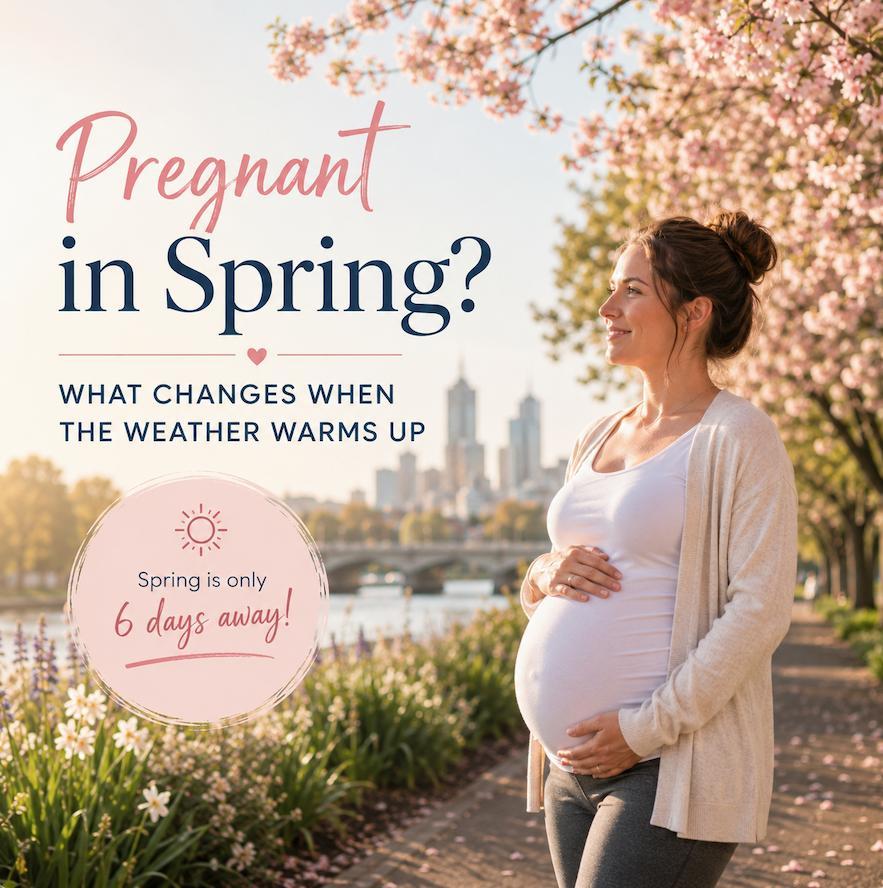
Pregnant in Spring? What Changes When the Weather Warms Up
With spring only six days away, Melbourne is about to head into longer days, warmer weather and, hopefully, a little more sunshine.
For many of our pregnant patients, it's a welcome change after winter. Spring makes it easier to get outside, start moving again and enjoy the warmer weather — but pregnancy can also make the change of season feel a little different.
Higher temperatures, increased pollen, stronger UV and changes to your activity levels can all bring up questions during pregnancy.
So, as we get ready to say goodbye to winter, here are a few things worth knowing about being pregnant in spring in Melbourne.
You may start feeling warmer than everyone else
Pregnancy already makes many women feel warmer than usual. Your body is working harder, your blood volume increases during pregnancy and your metabolic rate changes.
Add a warm Melbourne spring day and you may notice that you become hot, sweaty or uncomfortable much more quickly than you used to.
The important thing isn't to avoid being outside, but to be sensible about overheating. On warmer days, exercise earlier or later in the day, wear light clothing, take breaks and listen to your body.
And remember, Melbourne spring weather can change very quickly. A cool morning can turn into a surprisingly warm afternoon.
Hydration becomes even more important
As temperatures increase, so does the amount of fluid we lose through sweating.
During pregnancy, good hydration is particularly important because your body needs additional fluid to support the increase in blood volume and the demands of pregnancy.
Rather than becoming fixated on a particular number of litres, a good practical approach is to drink regularly throughout the day and increase your intake when exercising or spending time in warm weather.
If you're thirsty, don't ignore it.
Spring is a great time to get moving
One of the nicest things about spring is that getting outside becomes much easier.
For most women with an uncomplicated pregnancy, regular physical activity is not only safe but encouraged. Walking, swimming, pregnancy-appropriate strength training and other forms of moderate exercise can all be excellent options.
Exercise during pregnancy can help maintain cardiovascular fitness and strength, support healthy weight gain and may also help with sleep, mood and some of the common physical discomforts of pregnancy.
The type and intensity of exercise that's appropriate will depend on your pregnancy, your previous level of activity and whether there are any complications.
If you're unsure what you should or shouldn't be doing, ask us. We would much rather have that conversation than have you stop exercising unnecessarily because you're worried about harming your baby.
Unfortunately, spring also means hay fever
For Melbourne allergy sufferers, spring can be difficult — and pregnancy doesn't make you immune to pollen.
A question we are often asked is:
“Can I take my usual hay fever medication while I'm pregnant?”
The answer depends on exactly what you're taking.
Some antihistamines and nasal sprays have reassuring safety information for use during pregnancy, while others may not be the first option we recommend.
Don't assume that because something is available over the counter it is automatically suitable during pregnancy. Equally, don't suffer unnecessarily because you're frightened to take anything. If you are unsure what to take just ask us.
Don't forget sun protection
It's surprisingly easy to get caught out by the UV in spring.
Pregnancy can also cause changes in skin pigmentation. Some women develop melasma, sometimes called the “mask of pregnancy”, which causes darker patches of pigmentation, particularly on the face.
Sun exposure can make this pigmentation more noticeable.
Regular sunscreen, a hat, shade and sensible sun protection are therefore particularly worthwhile during pregnancy.
Swelling can become more noticeable as the weather warms up
Swollen feet and ankles are common later in pregnancy, and warmer weather can make them more noticeable.
This is usually related to normal pregnancy changes, including increased blood volume and pressure from the growing uterus affecting blood return from the legs.
Gentle movement, avoiding sitting or standing in one position for very long periods and putting your feet up when you can may help.
However, sudden or significant swelling — particularly involving the face or hands — shouldn't simply be blamed on the weather.
If swelling develops suddenly or is associated with headache, visual changes, upper abdominal pain or feeling unwell, contact your maternity care provider promptly, as these can be symptoms associated with pre-eclampsia.
Food safety still matters when the weather warms up
Spring also tends to mean more picnics, barbecues and eating outdoors.
During pregnancy, food safety deserves a little extra attention.
Foods that require refrigeration shouldn't be left sitting in warm temperatures for extended periods, and meat should be appropriately stored and cooked. The usual pregnancy food-safety recommendations regarding foods with a higher risk of infections such as Listeria also continue to apply.
You don't need to avoid social occasions or become anxious about food. A little common sense around storage, preparation and temperature goes a long way.
What about travel?
Spring often brings weekends away, weddings, babymoons and plans for the upcoming summer holidays.
Most women with uncomplicated pregnancies can travel safely during much of their pregnancy, but there isn't one rule that applies to everybody.
How many weeks pregnant you'll be, where you're travelling, how long you'll be away and whether there are any complications with your pregnancy all matter.
If you're planning a trip, particularly interstate or overseas, mention it at one of your appointments. We can discuss timing, flights, travel insurance, medications and what medical care would be available at your destination if you unexpectedly needed it.
A new season, but the same advice
Pregnancy doesn't need to become a long list of things you're not allowed to do.
Spring is a great time to walk, exercise, travel, see friends and enjoy being outside. Most of the time, a few sensible adjustments are all that's required.
Every pregnancy is different, however. Advice that is perfectly appropriate for one woman may not be right for another, particularly in a high-risk or complicated pregnancy.
If you're unsure about exercise, medication, travel, swelling, hydration or anything else as the weather changes, bring it up at your appointment.
There is no such thing as a silly pregnancy question — and getting advice that's specific to you and your pregnancy is always better than trying to work it out from Google.
Dr Stephen Cole and the Team Cole team provide specialist obstetric care in Melbourne, including uncomplicated and high-risk pregnancy care, multiple pregnancy care and maternal-fetal medicine.